Sony a7 V Review: Best Hybrid Camera Under $3,000?
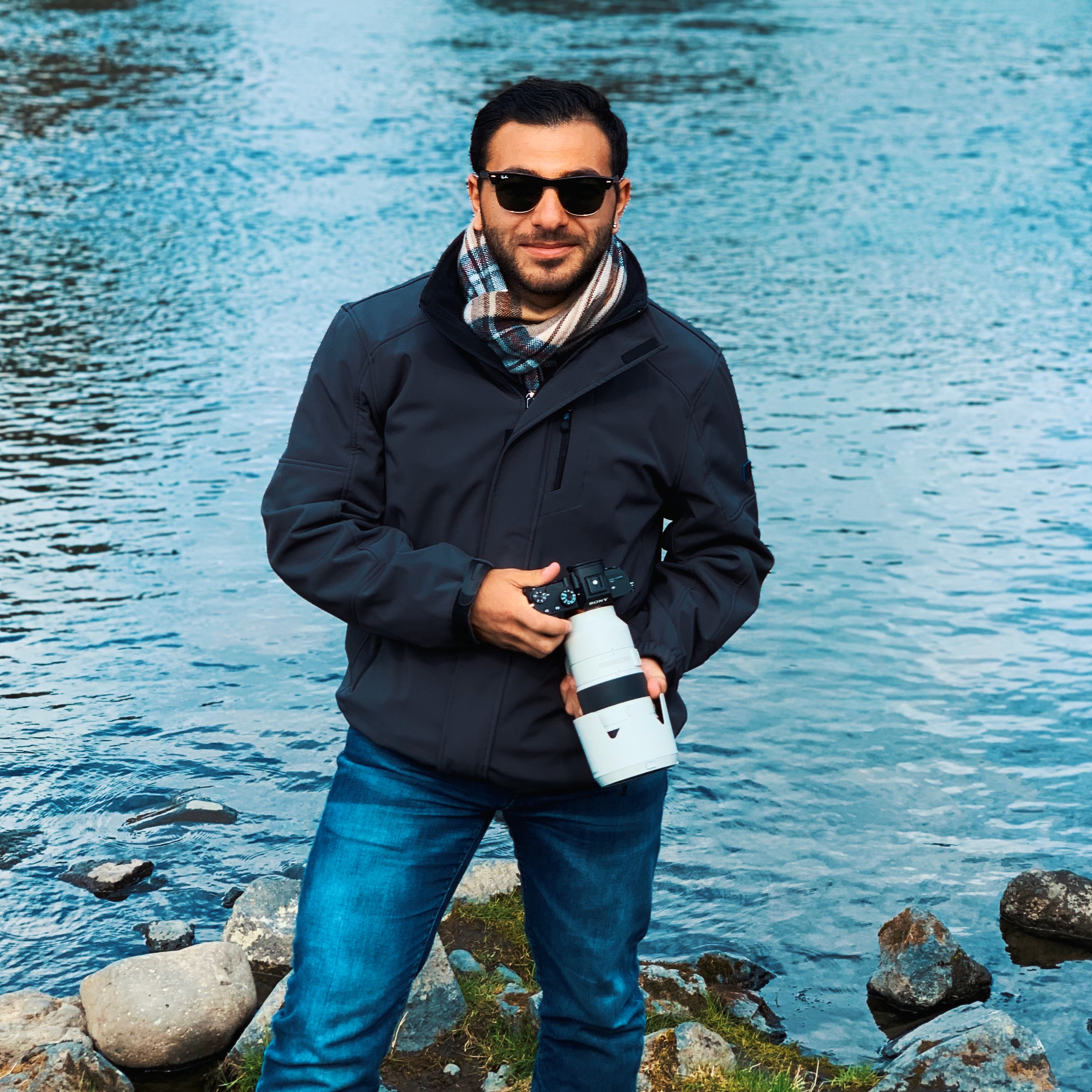
Sony just announced a near-flagship camera for under $3,000: the Sony a7 V. It has me asking three questions.
Should I trade my a1 II for it? Is it the best hybrid camera under $3,000? And is it worth upgrading from the a7 IV?
Quick context on where I'm coming from: I'm an outdoor adventure photographer, I worked at B&H for five years, and right now I'm driving across the US living in my camper shooting wildlife and landscape. I filmed this at 5 degrees in Yellowstone, so I'll be efficient.
Some of the links below are affiliate links. If you buy through them I earn a small commission at no extra cost to you, and it helps support the channel.
Sony a7 V key specs
Spec | Sony a7 V |
Sensor | 33MP partially stacked |
Processor | BIONZ XR2 with a dedicated AI processing unit |
Burst | 30 fps electronic, 10 fps mechanical |
Raw at burst | Full 14-bit even at 30 fps |
IBIS | 7.5 stops center frame, up from 5.5 on the a7 IV |
Video | 4K120 cropped, 4K60 uncropped, 10-bit 4:2:2, FHD 240 |
Open gate | No |
Card slots | CFexpress Type A + SD, second slot SD only |
Ports | Two USB-C, replacing the multi-interface port |
Claimed dynamic range | 16 stops, per Sony |
The sensor is the headline
A new partially stacked 33MP sensor. People were wondering whether Sony would put a new sensor in this at all, so it's great to see.
Partially stacked means faster readout, which means less rolling shutter. If you shoot sports, wildlife, anything fast-moving, or video, that matters a lot.
They kept it at 33 megapixels, and honestly I think 33 is the sweet spot.
Burst shooting, and why 14-bit matters
30 fps on the electronic shutter, which is three times the a7 IV. 10 fps mechanical, same as before.
Being able to shoot fully electronic means no mechanical shutter wear at all.
Here's the detail people miss: some cameras drop their bit depth to hit high burst rates. The a7 V holds full 14-bit raw at 30 fps. I wouldn't want to trade bit depth for frame rate, so this is a big deal.
Pre-capture
Hold the shutter halfway and the camera is already recording frames. When the animal finally moves, you press fully and it saves everything from *before* your reaction.
Adjustable from 0.3 seconds up to 1 second, which not every camera lets you set.
Speed Boost
Pulled from the a9 III and a1 II. Shoot at a lower frame rate to keep your file count sane, then hit a button and jump to the high rate exactly when the action happens.
On those bodies it lives on the C5 button. The a7 V doesn't have a C5 button, but you can assign Speed Boost to any custom button.
Autofocus and the AI unit
The new BIONZ XR2 and dedicated AI processing unit bring the subject recognition from the a7R V, a1 II and a9 III down to this price.
Sony's autofocus is already unparalleled. What I particularly like is auto subject detection — leave it in auto and the camera works out what it's looking at rather than you telling it in advance. That's from the a1 II.
There's also an auto-framing crop mode where the camera follows you around the frame. Not for me, though I can see the use.
Video
Finally, 4K120, though cropped. 4K60 uncropped, all in 10-bit 4:2:2, plus FHD 240 for genuinely slow motion.
I can't call the 4K60 full-frame, because that would imply open gate, which this camera does not have.
The body
Very similar to the a7R V, which means the flip-up and flip-out screen. It's the most coveted Sony screen, everybody loves it, and it's my favourite thing here.
Two USB-C ports replace the old multi-interface port, aimed at gimbal use. Know the difference between them: one is for power delivery and one is for data. You can use either for both, but each is significantly slower at the other job.
My three concerns
1. No open gate. Not a dealbreaker, and it may be overhyped generally, but everybody is asking for it and the competition is shipping it. If I have a full-frame sensor I want the option.
2. The second card slot is SD only. If you're using the a7R V body, just make both slots CFexpress Type A and SD. That's my opinion, but it's a fair one at this price.
3. Composite imaging is half-implemented. They've added some, but you have to use Sony's proprietary desktop software. I'm not asking for full OM System-style computational modes, but if you're going to enter this space, give people the option to do it in camera. I imagine the processing cost is the reason.
Will I trade my a1 II for it?
Wait and see. I need to put them head to head in the field.
I understand they're completely different tax brackets. But the a7 V delivers on a lot of what the a1 II delivers on, it's half the price, and 33 megapixels is still fantastic. Partially stacked versus fully stacked is a real difference and I want to test it properly.
I'm about 70% of the way to considering the switch. Let me know if you want that head-to-head video.
Is it the best hybrid camera under $3,000?
It depends entirely on whether you shoot photo first or video first.
Photo first: yes, I think it is, or at least one of the very best. I'm a Sony fan and I love the autofocus and the images.
Video first: no. The Nikon ZR just launched with 6K60 and RED RAW, and the Canon R6 III does 7K60 raw. Different cameras and different markets, but on raw video capability the a7 V isn't the leader under $3,000.
It's still an excellent hybrid for portrait, landscape, wildlife, and honestly just about any photography. Perhaps not for beginners, purely on price.
Is it worth upgrading from the a7 IV?
The a7 IV is a fantastic camera. So is the a7 III. I still think the a7 V is worth the upgrade, for two reasons:
The partially stacked sensor makes a bigger difference than you'd expect. It could in principle mean lower dynamic range, and that needs field testing, but Sony claims 16 stops
30 fps burst is transformative for wildlife and sports
If you want maximum resolution, the a7R line is better. If you want low light, the a7S line is better. If you want the middle-ground sweet spot, the a7 V is it.
I expect to pick one up in the near future.
FAQ
Does the Sony a7 V have open gate?
No. That's my biggest complaint.
How many frames per second does the a7 V shoot?
30 fps electronic and 10 fps mechanical, holding full 14-bit raw at 30.
Is the a7 V worth upgrading to from the a7 IV?
I think so, mainly for the partially stacked sensor and triple the burst rate.
Does the a7 V have pre-capture?
Yes, adjustable from 0.3 to 1 second before you fully press the shutter.
a7 V or a1 II?
The a1 II is still the flagship with a fully stacked sensor, but the a7 V gets close at half the price. I'm genuinely considering the switch and need field time to decide.
Best video camera under $3,000?
Not this one. Look at the Nikon ZR or the Canon R6 III if raw video is your priority.
Final thoughts
A near-flagship feature set at half flagship money, with a couple of decisions I'd argue with. For photo-first hybrid shooters it's an easy recommendation.
What do you think? Worth the upgrade, worth trading an a1 II for, better than the Canon and Nikon competition? Let me know in the comments.
The light's getting nice, so I'm going to go see if I can find some wolves.
Gear in this video
From this video’s description. These are affiliate links, so buying through them supports the channel at no extra cost to you.
Comments