Sony a7CR Review: The Best Hybrid Travel Camera?
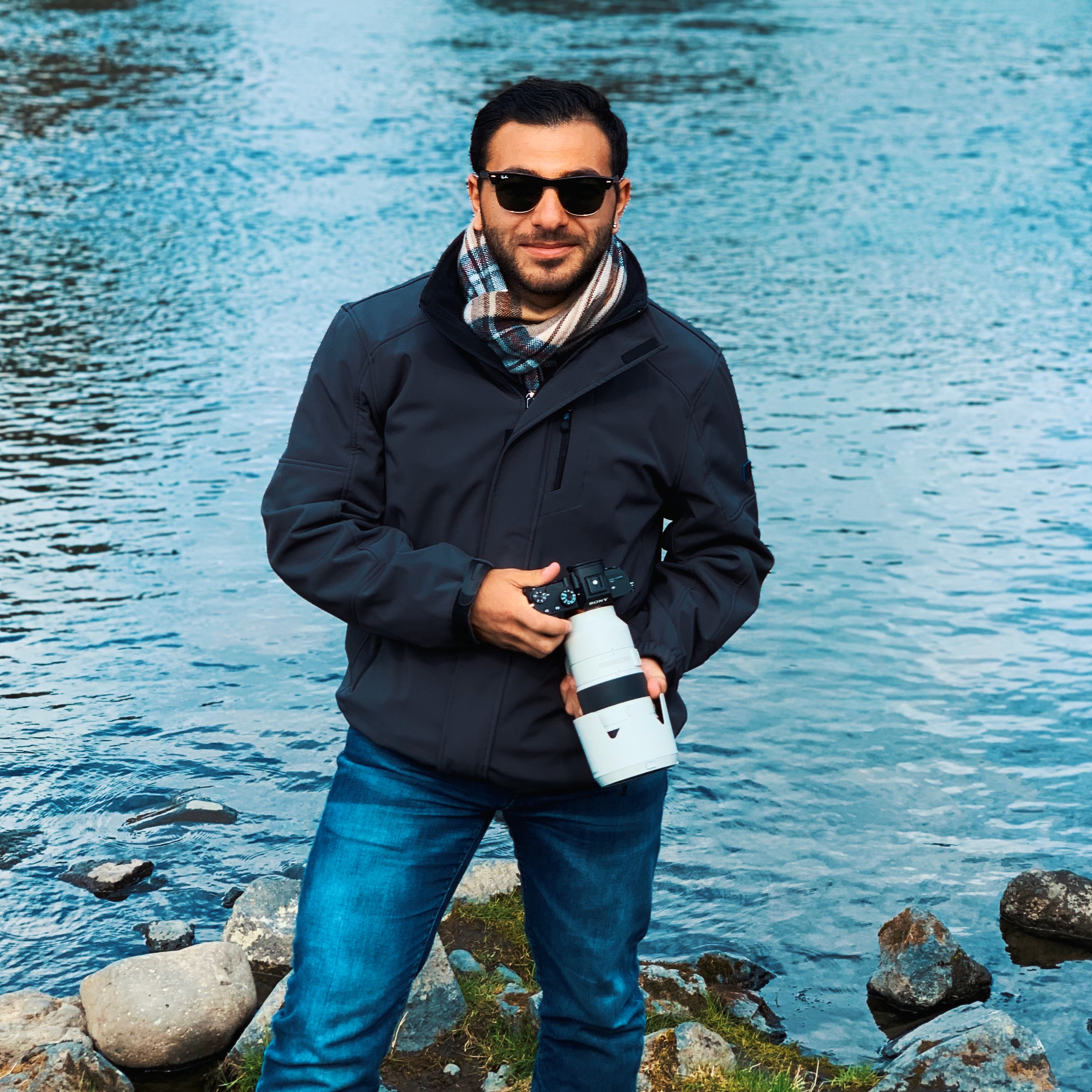
This might be one of the most underrated cameras ever made, and possibly one of the best cameras Sony has ever built. It completely changed what I think I need in a camera.
This is the Sony a7CR, and the a7C line generally. Here's why it's nearly the perfect travel camera, and the few things keeping it from that title.
Some of the links below are affiliate links. If you buy through them I earn a small commission at no extra cost to you, and it helps support the channel.
Why I care about this camera so much
I've taken this all over the world. I walked over 100 miles on the Camino de Santiago in Spain with this camera and one lens, the Sony Zeiss 55mm f/1.8, which is a massively underrated lens in its own right.
I shot both photo and video the whole way. Not hauling a pile of gear made the trip genuinely better. All I carried was this and a DJI Mini 4 Pro. For backpacking with a full-frame mirrorless system, I don't think there's anything better on the market.
I came to Sony through the a6300, my first Sony camera, then moved up to full frame. The a7C is essentially a full-frame camera inside an APS-C-sized Sony body, and when that clicked for me it was mind-boggling. Cramming that much technology into a body that small had a real effect on the whole camera industry.
The a7C line explained
Camera | Based on | Resolution | Video |
a7C (Sept 2020) | a7 III | 24MP | 4K30, 8-bit |
a7C II (Aug 2023) | a7 IV | 33MP | 4K60, 10-bit |
a7CR (Aug 2023) | a7R V | 61MP | 4K60, 10-bit |
The "C" stands for compact. The original a7C was an a7 III squeezed into a small body.
Three years later Sony announced the a7C II and the a7CR. I was at Sony's condo in Snowbird, Utah for that launch and made the video, and that's when my thinking on these cameras shifted completely.
"CR" stands for compact resolution. You're getting a7R V resolution, 61 megapixels, in this tiny body. The a7C II gives you a7 IV characteristics at around 33 megapixels. Video features are roughly the same between them, minus a few crops on 4K60.
Worth noting how much changed between the original a7C and the second generation: resolution went from 24 to 33 megapixels, Sony made incredible improvements to colour science in that window, and video jumped from 4K30 8-bit to 4K60 10-bit.
What I'd still like is 4K120. I imagine that down the line, if Sony announces an a7R VI, we'll eventually get a compact version with a 61MP sensor and 4K120. That would be about the perfect hybrid camera.
Why this form factor matters
As someone who's outdoors constantly, I need the least weight and the smallest footprint in my pack.
This slides into a backpack easily, and you can carry multiple bodies without it becoming a problem. Which in turn means you can bring more lenses.
I also live full-time in a camper, so anywhere I can save weight and space makes a real difference.
The grip and EVF complaints
The grip. People complain. I've never found it to be an issue. Sony includes a handle extension that lets your pinky sit properly, but it adds unnecessary bulk and I never bother with it.
The EVF. I'd prefer a bigger one, and centred like other bodies. But if you're buying a compact camera, you get a compact EVF. That's a necessary tradeoff, not a flaw.
For street photography, and versus the RX1R III
Pair this with small Sony glass and it's excellent. The 55mm Zeiss is my favourite combination. People also add a thumb grip.
On the Sony RX1R Mark III: both are 61 megapixels, but the RX1R III is a fixed-lens point-and-shoot and runs around $2,000 more. As someone who shoots landscape and wildlife primarily, not just street or portraiture, I'd take the interchangeable lens mount every time. That price gap makes the a7CR and even the a7C II look like strong value.
Image quality
The photos out of this camera are beautiful and the dynamic range is on point. Video results have been excellent too, and I've used it for a lot of recent videos.
One nice detail: Sony added display LUT support. I shoot S-Log3 with a Rec 709 display LUT applied, which makes monitoring far easier. Unless I've missed it, I don't believe Sony has shipped that to the a7R V by firmware yet, which is a genuinely odd gap.
The downsides
A single SD card slot. In my opinion this is what separates it from being a truly professional camera. You can absolutely get professional results, but if you're shooting someone's once-in-a-lifetime moment, dual recording slots are imperative
The EVF is small, as covered
No joystick. Most other Sony bodies have one. I've adapted to using the centre button and the wheel instead, so there are workarounds
Micro HDMI. I've broken more of those cords than I care to admit
Not enough custom buttons, largely because there's nowhere to put them. I expect future models will add one for Speed Boost or pre-capture
a7CR or a7C II?
The a7CR is a little steep for what it is, because you're paying a high price for a smaller body that sacrifices buttons, dual slots, and the general form factor of a professional camera.
The a7C II is more appealing on price. But having 61MP resolution in a body this small is worth it to me personally.
Honestly, you can't go wrong with either.
Who should buy one?
Travellers, hikers, backpackers, anyone chasing adventure, anyone living in a camper, street photographers and portrait photographers. If you need a small, compact camera without giving up full frame, this is the go-to.
FAQ
What's the difference between the a7CR and a7C II?
The a7CR is an a7R V in a compact body at 61MP. The a7C II is an a7 IV in a compact body at 33MP. Video is broadly the same.
Is the a7CR good for travel?
It's the best full-frame mirrorless travel option I've used. I walked over 100 miles of the Camino de Santiago with it and one lens.
What does the C stand for in a7C?
Compact. The R in a7CR stands for resolution.
Does the a7CR shoot 4K120?
No. 4K60 in 10-bit. 4K120 is the main thing I'd still want.
a7CR or Sony RX1R III?
The a7CR, for me. Same 61MP, roughly $2,000 less, and an interchangeable lens mount instead of a fixed lens.
Is one card slot a dealbreaker?
For paid, once-in-a-lifetime work, yes, you want dual slots. For everything else, no.
Final thoughts
Full-frame quality, 61 megapixels, and it disappears into a backpack. The compromises are real but they're the right ones for how I shoot.
What do you think of the Sony a7C line? Let me know in the comments. I'll see you out there on the road.
Gear in this video
From this video’s description. These are affiliate links, so buying through them supports the channel at no extra cost to you.
Comments