Sony a7 V vs a1 II: 3 Months Testing in Yellowstone
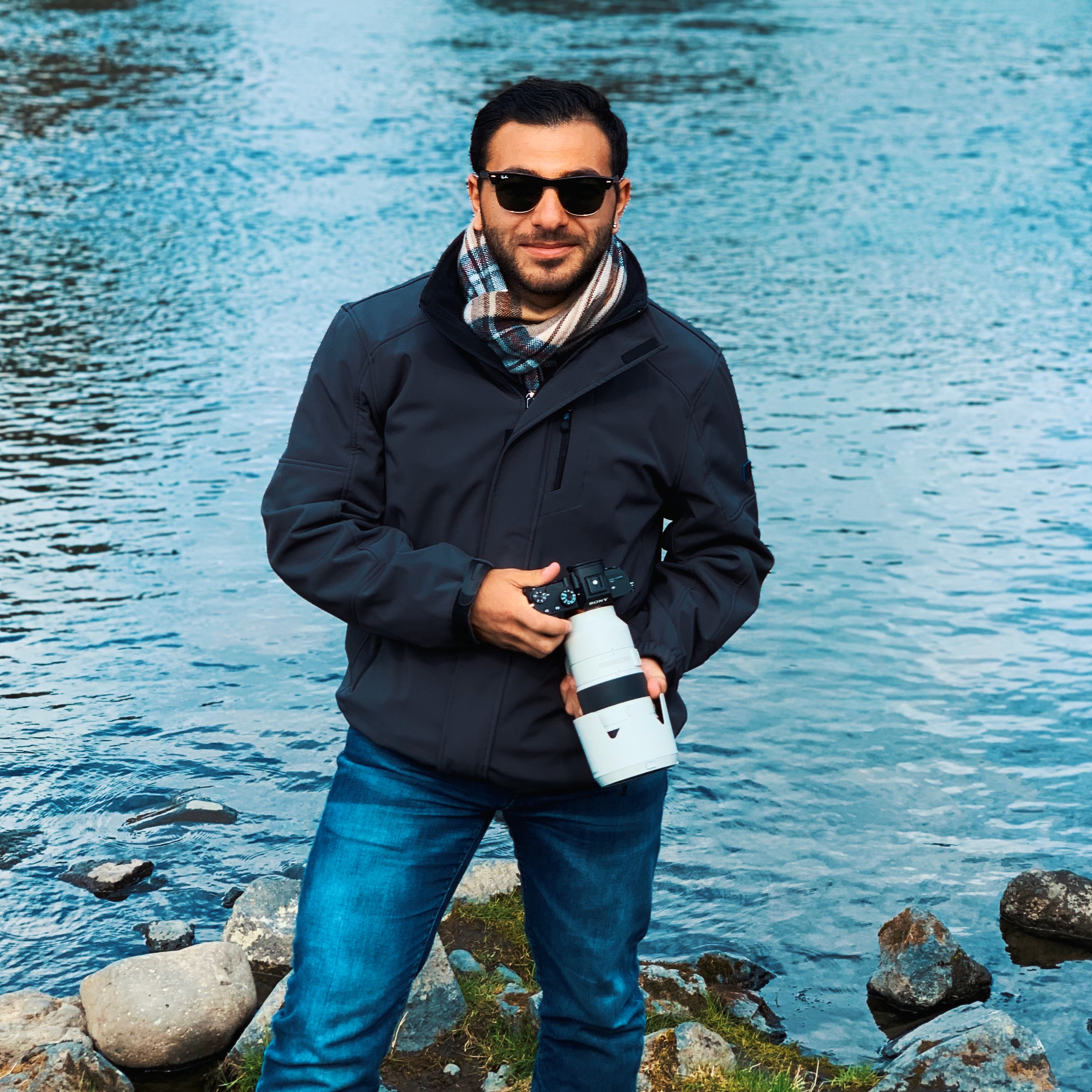
Is the Sony a7 V an a1 II killer?
That's what I've been trying to answer for the last three months, and the fact that it took me this long says something in itself. I couldn't decide between these two until now.
I've been testing them primarily for wildlife and landscape, mostly photography, in Grand Teton and Yellowstone, where I spent almost the entire winter.
Some of the links below are affiliate links. If you buy through them I earn a small commission at no extra cost to you, and it helps support the channel.
The spec comparison
Sony a7 V | Sony a1 II | |
Sensor | 33MP partially stacked | 50MP fully stacked |
Readout speed | Around 14 ms | Around 4 ms |
Burst | 30 fps | 30 fps |
Buffer (compressed raw) | Around 3 seconds | Around 5 seconds |
Raw depth | 14-bit | 14-bit |
Video | 4K120 with APS-C crop | 8K30, 4K120 uncropped |
Body | Similar to a7R V | Similar to a9 III |
Pre-capture | Yes | Yes |
Speed Boost | Yes | Yes |
Price | Roughly half | Roughly double |
The bodies are not the differentiator
The a7 V essentially uses the a7R V body. The a1 II is closer to the a9 III: newer, sleeker, slightly better ergonomics, an additional top dial so you're not diving into menus for certain settings, and the C5 button, which most people assign to Speed Boost.
But ergonomics, battery performance and the screens are all very similar. The real difference is inside.
Sensors and readout
The a7 V has a new partially stacked sensor with a readout speed around 14 milliseconds, which means less rolling shutter than before in both photo and video.
The a1 II is fully stacked at around 4 milliseconds, roughly three times faster.
Resolution splits 50MP against 33MP. If you want maximum detail, for archival work or landscape, the a1 II delivers it. That's simply what more megapixels do.
But 33 megapixels is more than enough in 98% of scenarios.
Notably, both cameras shoot 30 fps burst, which genuinely surprised me.
The buffer is the real gap
This is the thing that makes the a7 V less attractive, and it doesn't get discussed enough.
The buffer is where images sit before they're written to the card. Even with fast CFexpress Type A cards, so the card isn't the bottleneck, you need a buffer that can absorb 30 frames per second. Higher resolution demands even more of it.
The 50MP a1 II manages around 5 seconds of compressed raw. The a7 V manages around 3. Using pre-capture reduces that further.
For wildlife or sports that matters. When the action is happening, you don't want to be waiting for a buffer to clear.
This is exactly why Speed Boost matters more on the a7 V. Shoot at a lower frame rate, then jump to 30 fps only when the action actually hits, and you're not filling the buffer for nothing.
Rolling shutter in the field
The a1 II at 4 milliseconds shows essentially none. I never noticed it, which is impressive.
On the a7 V I did notice more, but only when panning very fast deliberately to test it. Tracking birds in flight, I barely noticed it, if at all. You have to be moving quickly for it to appear.
If you shoot sports or extremely fast wildlife, the a1 II is the safer choice. For 95% or more of situations, the a7 V is fine.
Dynamic range: the surprise
Stacked sensors often cost you dynamic range and low light performance, and everyone assumed the a7 V's partially stacked sensor would give something up here.
As my friend Mike pointed out, Sony appears to have implemented something like dual gain output on the a7 V, and it seems to apply only in mechanical shutter below ISO 1000.
The result: in mechanical shutter under ISO 1000, the a7 V actually has slightly better dynamic range than the a1 II. In electronic shutter it isn't as good.
Both cameras have fantastic dynamic range and I've enjoyed both. But if you want the absolute best of these two, in that specific mode the a7 V wins, which is a little crazy.
Low light performance was similar between them.
Autofocus
Very close, but after multiple wildlife scenarios where autofocus is critical, mostly paired with the 600mm f/4, the a1 II is slightly better. You'd expect that from the faster readout and fully stacked sensor.
So is the a1 II worth double?
For me, as a wildlife and landscape photographer, you'd think the a1 II is the obvious answer. At twice the price it's harder to justify.
The a7 V checks most of the same boxes, and across most of my results I didn't see a significant performance increase from the a1 II. 50 megapixels wasn't dramatically better than 33 in practice.
Buy the a1 II if: you shoot primarily video with fast-moving subjects, you need uncropped 4K120, you need the longer buffer, or you want the flagship body. Unless you're a dynamic range or low light obsessive, it's technically better in nearly every respect.
Buy the a7 V if: you'd rather put the price difference into a better lens. That's my honest recommendation, and I think it's the better value.
And if you're photographing the genuinely fastest things out there, the a9 III is arguably the right camera, with the a1 II behind it.
FAQ
Is the Sony a7 V an a1 II killer?
Close. It matches the a1 II on burst rate, pre-capture and Speed Boost at roughly half the price. The a1 II still wins on readout speed, buffer, resolution and uncropped 4K120.
Which has better dynamic range?
Surprisingly the a7 V, in mechanical shutter below ISO 1000, thanks to what looks like dual gain output. In electronic shutter the a1 II is better.
Do both shoot 30 fps?
Yes, which is the surprise of this comparison.
How big is the buffer difference?
Around 5 seconds of compressed raw on the a1 II versus around 3 on the a7 V, with fast CFexpress Type A cards.
Is rolling shutter a problem on the a7 V?
Only if you pan very fast. Tracking birds in flight I barely saw it.
Which has better autofocus?
The a1 II, slightly, especially on long glass.
Final thoughts
The a1 II is the better camera. The a7 V is the better buy for most people, and the money saved buys a lens that will improve your photos more than the body upgrade would.
Are you team a1 II or team a7 V? Let me know in the comments. I'll see you out there on the road.
Related:
Gear in this video
From this video’s description. These are affiliate links, so buying through them supports the channel at no extra cost to you.
Comments