Sony a7R VI + 100-400mm Review: Tested in Yellowstone
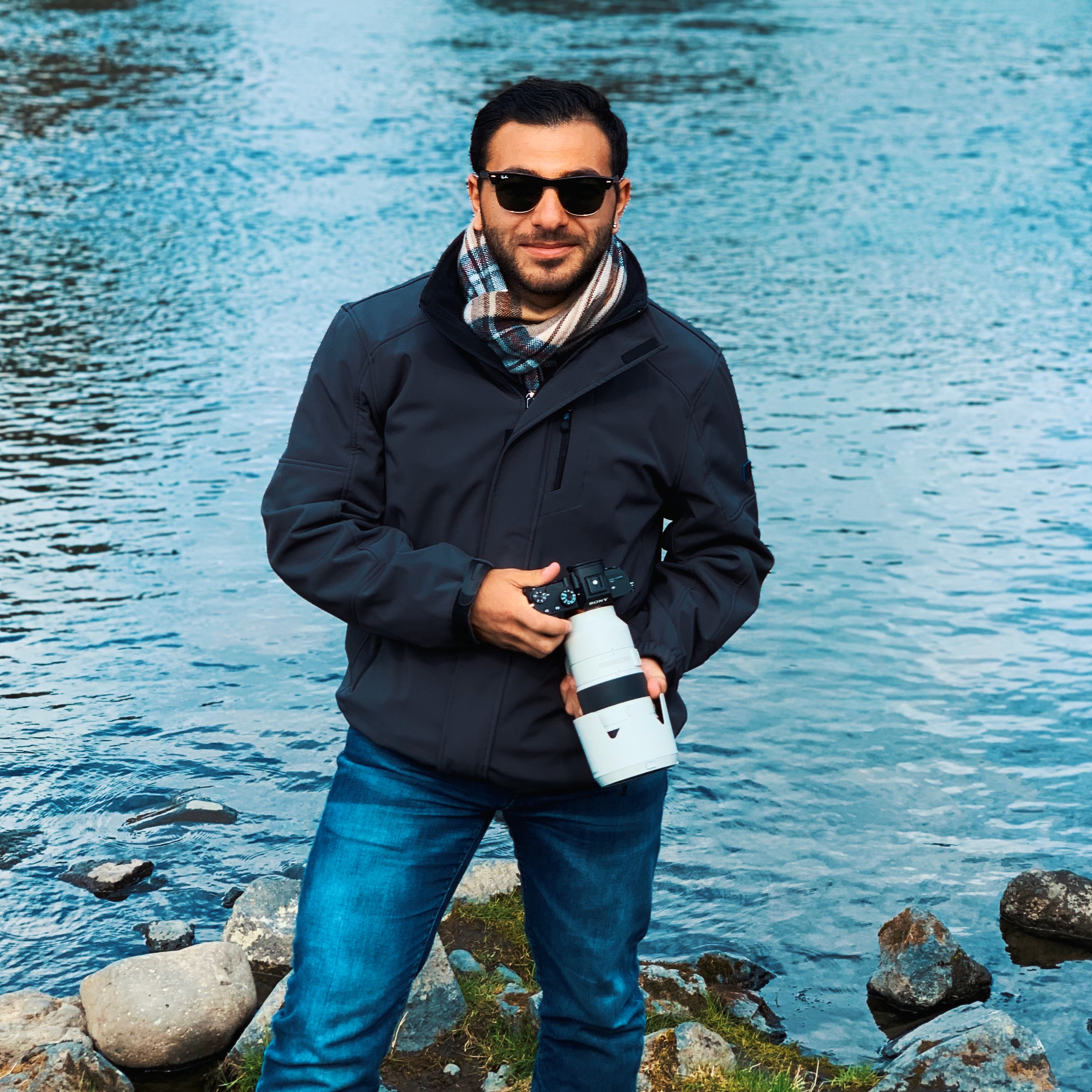
Sony announced the a7R VI and the 100-400mm f/4.5 G Master, and I've been testing both here in Yellowstone.
Does the combo live up to the hype? How does it compare to the a7R V, and to the flagship a1 II? And is it worth the price? I'll also cover the downsides I've hit in the field.
Some of the links below are affiliate links. If you buy through them I earn a small commission at no extra cost to you, and it helps support the channel.
Sony a7R VI: the headline changes
Spec | a7R VI | a7R V |
Sensor | 67MP fully stacked | 61MP, not stacked |
Burst | 30 fps | 10 fps |
Dynamic range | 16 stops | — |
Video | 8K30, 4K120 | 4K60 |
Stabilisation | About 8.5 stops | — |
Pre-capture | Yes | No |
Speed Boost | Yes | No |
Buffer | Around 150 raw images | — |
Price | Around $4,500 | — |
The sensor is fully stacked, and honestly I was expecting partially stacked. The readout speed difference versus the a7R V is night and day. It's genuinely impressive that Sony put a fully stacked sensor in this camera, and it's probably the only way these specs were possible.
30 fps burst versus 10 fps on the a7R V is a three-times jump. That's an extreme leap for this line.
Resolution goes to 67 megapixels, 66.8 if you want to be technical. There's a new processor to handle all of it, and Sony is claiming 16 stops of dynamic range, which is more than I'll realistically ever need.
Pre-capture and Speed Boost
These are my two favourite features and I use them constantly for wildlife. They started on the a9 III, then the a1 II, then the a7 V.
Pre-capture records up to a full second before you fully press the shutter, and you can lower that if you don't want as many frames.
Speed Boost lets you sit at a lower continuous rate and jump to 30 fps when the action hits. This camera doesn't have the C5 button the a9 III and a1 II use for it, so I assign Speed Boost to the AEL button on the back. A small thumb movement to the right and I'm at full rate.
Speed Boost matters even more here, and I'll explain why in the downsides.
Video
8K30, which I used to film an extraordinary wolf scene in Yellowstone. Standing there, I wanted the highest quality capture possible, so I switched into 8K.
4K120 is the fix for my biggest gripe with the a7R V, which only did 4K60. I mainly use it for B-roll, but filming wildlife you want to slow things down as much as possible. It's uncropped, with the caveat that you enable the angle of view priority setting, which turns off noise reduction. Fine by me.
Small but welcome additions
A tally lamp on the side, which I've wished Sony would add for years
Illuminated back buttons, with adjustable brightness, for astro or dark venues. I rarely shoot that dark these days, but nice to have
Dual USB-C ports, one for charging and one for data, carried over from the a7 V
A new hot shoe audio interface enabling 32-bit float and four-channel audio. The previous unit was expensive so I'm curious on pricing. I currently record externally to a Zoom F3 and sync in post, so removing that step appeals
Dual gain function
New on the video side, expanding dynamic range. It slows the readout, so it's aimed at still or slow-moving subjects like landscapes, and it's limited to 4K30 at max ISO 3200 in S-Log, or ISO 400 in Rec 709.
On the photo side it's doing the same thing my friend Mike identified on the a7 V: in mechanical shutter below ISO 1000 you get greater dynamic range.
Autofocus
The a7R V was already remarkable. This feels a bit faster, which tracks with the quicker readout. Snappy and reliable, including behind obstructions, which is what we expect from Sony now.
The 100-400mm f/4.5 G Master
I've genuinely enjoyed this lens.
100-400 is a sweet spot focal range. I have the 600mm prime and the 70-200, and I also own the 200-600, which honestly I haven't touched in a long time. This bridges the gap far better than the 200-600 ever could.
A constant f/4.5 lets in a good amount of light for something this small and light. From a distance you'd think it was the 300mm f/2.8. It's that compact.
I definitely prefer it to the variable-aperture 100-400 G Master. I was never crazy about that lens. It's sharp, but if I'm accepting a variable aperture I'd rather have the extra reach of the 200-600. This new one blows both away.
The detail even with teleconverters blew me away. With the 1.4x you're at f/6.3, which I think is the perfect pairing. With the 2x you're at f/9, and it's still workable.
The downsides
A new battery. I've already accumulated a pile of Sony batteries. The NP-FZ series was fine, I never complained about it. Apparently the new one is 17% better, and in the field I haven't had to think about battery life at all, so maybe it's justified. It was still a shock to hear.
The buffer. Similar to the a7 V, which is impressive at this resolution but still a limitation: around 150 raw images. At 30 fps with pre-capture running, you have only a few seconds before it fills and the frame rate throttles down. This is exactly why Speed Boost matters so much here. I only ever hit full 30 fps when I genuinely need it, so I'm not filling the buffer for nothing.
Still no open gate. I know it's controversial and some people are against it. I'd love the option. Filming wildlife out here I've realised how useful it would be, because I want to share clips socially and I'm always going to frame horizontally. Recropping to vertical without open gate doesn't really work. It's not a major downside, but the competition is shipping it.
On the lens
Very little to dislike. If I'm reaching: Canon has a 100-300mm f/2.8 and every Sony shooter is a bit jealous of it, though it's double the price.
More practically, shooting wildlife I'm at 300 to 400mm most of the time, and really 400. Any time I find myself at 100mm I think, why not grab the 70-200 and be at f/2.8 instead.
I'd love a built-in teleconverter. Seeing Nikon shooters out here with built-in TCs on their 600s makes the case. Every Sony wildlife photographer I've met wants this. When you're filming wildlife, taking the camera off to fit a teleconverter costs you a split-second moment you can't recreate.
Will this kill the a1 II?
The a1 II currently sits around $2,500 higher than the a7R VI. For that you get roughly 10 milliseconds faster readout and a much deeper buffer, around 500 raw images versus 150. Plus the flagship body.
That's $2,500 for two features, primarily.
If you're photographing the absolute fastest subjects, F1 or similar, the a9 III makes more sense, with the a1 II behind it. For 98% of scenarios this is more than fast enough, and I've seen plenty of people out here shooting wildlife with it.
Is it worth the price, and will I buy one?
Both camera and lens sit around $4,500, and comparing against previous iterations plus inflation, that's well positioned.
The camera, yes, I'll be picking one up. The lens I'd like, but not at the same time. I like it enough to swap it for my 200-600 eventually, I'm just not eager right now, since I'm shooting the 600mm prime for wildlife 60 to 70% of the time.
FAQ
Is the a7R VI fully stacked?
Yes, which surprised me. I expected partially stacked.
How fast is the a7R VI burst?
30 fps, three times the a7R V's 10 fps.
How deep is the buffer?
Around 150 raw images, so a few seconds at full rate. Use Speed Boost to manage it.
Does the a7R VI shoot 8K?
Yes, 8K30, plus 4K120 with the angle of view priority setting enabled.
Is the a7R VI an a1 II killer?
Close. The a1 II keeps a faster readout and a much larger buffer for about $2,500 more.
Does it have open gate?
No, and that's my main remaining complaint.
Is the 100-400mm f/4.5 better than the 200-600?
For my shooting, yes. Constant f/4.5, far more compact, and it bridges the gap from the 70-200 better.
Final thoughts
67 megapixels, fully stacked, 30 fps, 8K30 and 4K120, at around $4,500. That's a lot of camera. The buffer and the new battery are the compromises.
Do you think the a7R VI is a letdown or did it exceed expectations? Let me know in the comments. I'll see you out there on the road.
Related:
Gear in this video
From this video’s description. These are affiliate links, so buying through them supports the channel at no extra cost to you.
Comments