6 Months Living in a Trailer Full-Time: Cost, Repairs, and Was It Worth It?
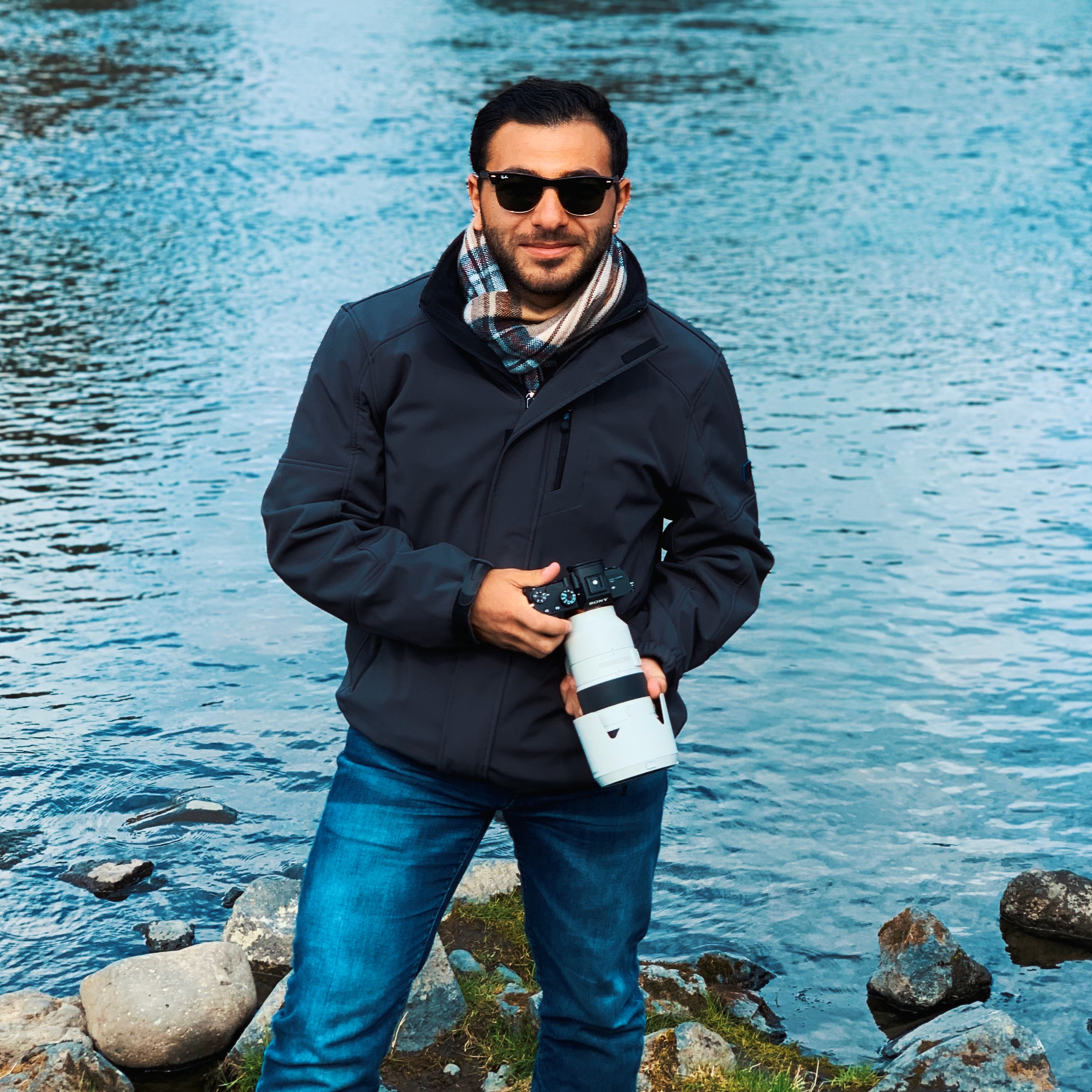
Six months ago I sold almost everything I owned, left my apartment, and left my job in New York City to live full time in a 96 square foot travel trailer and drive across the country. This is the honest six month check in. What went right, what went wrong, what broke on the trailer, roughly what it has cost me month to month, and whether any of it was actually worth it.
Some of the links below are affiliate links. If you buy through them I earn a small commission at no extra cost to you, and it helps support the channel. Thanks for that.
I am writing this from a free campsite on top of a mountain just outside Glacier National Park. It is 65 degrees here and 105 degrees back in New York, which is a decent summary of why I am still doing this.
Why I moved into a travel trailer full time
There were a few reasons, but the main one was that I just wanted to be outside more than I was. I was working in New York City, and even on weekends I was working on side projects, so I never got out as much as I wanted. Living in the New York area, I was never immersed in nature the way I wanted to be.
I had taken extended road trips before, mostly in the northeast, months at a time, and I loved living on the road. I like the challenge of living in a small space. I like being able to pick up and go wherever I want. Years ago I was on a beach in Florida and saw a line of vans parked on the waterfront, and I remember thinking those people have million dollar views and they can leave for the mountains whenever they feel like it. That kind of freedom was a big part of it.
The other part is that I want to see more of the United States, and traveling by road is by far my favorite way to do it because I move slowly. It rained every single day here last week. The week before was beautiful. Those are completely different experiences of the same place, and you only get both if you stay a while.
If you want the longer version of that decision, I wrote about it in why I sold everything to live in a camper and 5 reasons I live full time in a 96 square foot camper.
Where I have been in six months
You might be surprised how few places I have hit, and that is because I have been moving really slowly, sometimes spending a month or more in one area.
Before I left New York for good I did a New England trip through New Hampshire, Vermont, and especially Maine, plus some time in the Catskills. Then when I actually took off from New York City it went New York, Pennsylvania, Ohio, Indiana, Illinois, Wisconsin, Minnesota, South Dakota, and then into Yellowstone and Wyoming. After that I spent a ton of time in Utah, dipped into Colorado, dipped into Arizona, and then came all the way up here to Montana.
Wyoming and Montana are where I have spent the most time by far. The scenery, the temperature, the general feel of it. I love it here.
Related reading: driving from NYC to Yellowstone towing a camper in winter, a month living full time in a camper in Moab, and a spring living in a camper in Yellowstone.
What went better than I expected
I have not gotten sick of the trailer. Friends and family keep asking if I want a hotel or an Airbnb for a night. Sure, but I do not feel like I need one, and it would have to be a genuinely nice place for me to notice a difference. I was sick for a week or two in Moab and even then my main thought was that I would rather be sick there than anywhere else.
Spending this much time in about 90 something square feet still has not worn on me, and I think that is because what is outside the windows keeps changing, and because this trailer has windows on basically every wall.
The wildlife access. Some of the experiences I had in Yellowstone this spring and in Glacier this past month were the best I have had on the road. Filming wolves, grizzly bears and their cubs. My first week in Glacier I was nervous because I had never been here and did not know anybody, and in that same week I got the best bear encounter of my life.
Getting outside is immediate. I open the door and I am outside. That is technically true for everyone, but it is a little more literal here, and being in Glacier at a free campsite is hard to argue with.
I am still saving money compared to New York. Mostly because New York is so expensive. But also because I do not really shop anymore. I have plenty of clothes in the camper and I have not felt any need to buy more, which was not the case when I had room to store things.
The people. A lot of interesting encounters in six months. If you are doing this solo you do have to go the extra mile. I go to bars and talk to people. I go to events. I put myself in rooms where I do not know anybody, sometimes on purpose. And in established campgrounds people come by constantly to ask about the setup because they see the solar panels outside.
What has not gone as planned
Repairs in month one. The first month out I started realizing I had work to do on my tow vehicle, and the day before I drove back to New York for the holidays I had an oil leak, because a shop had over tightened something on the oil cooler during an oil change a couple weeks earlier. So my first month on the road came with thousands in expenses. I knew that was coming eventually, I just did not think it would be immediately. To be fair, I hit somewhere around a hundred something thousand miles right around then, which is naturally when maintenance shows up.
Summer crowds. Everything has changed over six months. It is getting harder to find places to camp, even paid campgrounds. You do not always know where you are sleeping, and you might have to drive further because your spot is taken.
Dry camping all winter. I spent the winter in Grand Teton and Yellowstone, and it was too cold to run the plumbing in a three season camper with this many windows. So I had no running water inside for months, which meant I had to stay at campgrounds with a shower and bathroom available. There were upsides. I saved money, it was quiet, and the winter had its own beauty. More on that in winter RV living below zero in Yellowstone.
Starting over, over and over. With a nomadic lifestyle you are constantly picking up and starting fresh. Meeting people, finding a routine, building some structure. It is genuinely a good challenge, but building a small community and then leaving it is one of the real downsides.
Decision fatigue. There are so many places you could go and fewer places you should go. For someone who is fairly indecisive, that adds up. Some people solve it by parking in one area for a long time so they are not choosing a campsite every night.
Weather. I moved to this campsite today specifically because it has rained every day for a week and the last spot would not have been good in a flood. I watch emergency alerts much more closely now, because my house moves. I was on an interstate in southern Wyoming that shut down mid drive because of wind, and there were blow overs on those highways. The flip side is that you can drive away from weather, which is exactly why I came north to Montana when the Southwest got too hot.
Structure and the gym. I need some kind of structure. Not as rigid as my old life, but something. Not being in one place for more than a few days scrambles your brain, especially when you are trying to work. And right now the nearest gym is an hour away, which means I am not going daily. In New York there was a gym and a grocery store on my street. I get into that more in 10 downsides of living in an RV full time.
How the trailer has held up after six months
This is a 2023 inTech Sol Dawn with the Rover package, and it has held up better than I expected. I chose it because inTech is known for better craftsmanship and the fiberglass build tends to last. There is a full walkthrough of the camper here.
Item | How it has gone |
|---|---|
Tires | Factory tires had the bare minimum rating for the weight. Upgraded to Falken Wildpeak |
Tire blowout | Happened in Hanksville, Utah at about 45 mph. My fault, I ignored a TPMS sensor that was not reading the night before |
Leaks | None so far |
Door gas strut | Rusted off and failed |
Propane furnace | Suburban. Ran nonstop all winter, made a strange noise for a month or two, seems fine now |
Refrigerator | My biggest complaint. Too small, especially the freezer |
Tanks | Fine. About a week of water, two if I am conservative. Ten minutes to dump and refill |
Towing | Added a weight distribution hitch later. Smoother at 65, never experienced sway |
On the blowout, I felt a slight tug and the Jeep held completely straight. As controversial as towing this trailer with a Wrangler is, that moment made me a lot more comfortable with the setup. Losing a tire at 45 to 50 going downhill is scary, and nothing moved.
On the fridge, I used to say the size was fine and I have changed my mind. If you spend real time away from a grocery store it is not enough space. On the east side of Glacier last week the grocery options were limited and expensive, so I stock up before going out into the wild.
On off road use, I have been impressed. I had to do some real off roading just to get to this spot, and I did some in Moab too. There are limits, and I go extremely slow, because trailers are not built for that kind of vibration. The Rover package helps, but I still do not push it.
Power and solar
I have been entirely off grid this whole time. There are 400 watts on the roof plus a 400 watt solar briefcase outside, so 800 watts total. I am definitely not getting all of that, and I will probably add another 200 watts on the roof at some point. I installed all of it myself.
Right now I am running lighting, AC power, and all of my work gear off the battery. I could run the air conditioner off it too, but I would kill the battery in five or six hours, so I do not. If you are weighing an all in one setup against building your own, I compared both in solar generator vs DIY solar.
What it actually costs to live in a trailer full time
Before I left, I built a spreadsheet with five different scenarios of the bare bones version of life on the road. Once I could see that my income covered those expenses, I took the leap.
Six months in, it swings a lot depending on how much I am moving.
Month | Situation | Gas | Camping | Total |
|---|---|---|---|---|
February | Parked in Moab most of the month | Around $380 | Effectively $0 on public land | Around $2,000 |
May | Living inside Yellowstone | Around $1,100 | $300 to $400 | Around $3,000 to $3,500 |
Typical | Moving at a normal pace | Around $700 | Varies | Closer to $3,000 |
A few notes on those numbers. In February my grocery bill was actually higher than gas at $640, and I have accepted that I apparently eat for a family of three or four. I do not eat at restaurants, so that line is basically zero. Gas has gone up a lot since February, which is why my average is now closer to $700 a month.
May was Yellowstone, which is one of the most expensive tourist markets in the country, and I was working the entire time, so a chunk of that was work related. Honestly, probably 60 percent or more of my expenses are work related, and working full time on the road means I drive more than I otherwise would.
On top of all that there is internet, phone, car insurance, health insurance, and subscriptions like Adobe.
There are absolutely cheaper ways to do this, especially if you are not towing. There are also much more expensive ways, mostly if you want full hookups at a campground. If you go that route, take the weekly or monthly rate. It is still going to cost more than boondocking on BLM or public land.
Rapid fire questions
Where do you shower? Probably 50 to 60 percent of the time in the trailer now that I have running water again. If I am at the gym, I shower at the gym, which is the easiest option. In Utah there were a lot of Planet Fitness locations so I used those. Campgrounds usually have showers too.
How do you get cell service? I have Starlink on the unlimited plan. Working full time on the road as a video producer means I am sometimes transferring terabytes a month, so I do not really have a choice. I am overwhelmingly happy with it and I basically do not think about cell service anymore, which lets me stay further out for longer. My Starlink Mini review is here.
What do you do for groceries? Early on I just went to the closest store and shopped often. Now I do a Walmart run roughly every two weeks to keep the bill down, since the fridge only holds one to two weeks of food.
How do you do laundry? Not much different from before, since I never had in unit laundry anyway. I use laundromats all over the country. I throw a load in, work on my computer in the trailer, swap it to the dryer, then put everything away straight from the laundromat. It is actually pretty efficient.
How do you handle condensation? It would probably be more of an issue out east or in the Pacific Northwest. I have been mostly in dry climates, so it has not been a problem, even in winter. I use moisture absorbing packets and vent with the Maxxair fans. If anything, the dryness got me at first with more frequent nosebleeds.
What is the bed like? It is a queen when it is set up, and it can be expanded to a king. It looks small on camera because the rear window curves back farther than it appears. So yes, I am filming in my bedroom, kitchen, dining room, and office, and I would not have it any other way.
Gear I actually use in the camper
Cell booster: amzn.to/3MpAvX0
EcoFlow Delta 2 Max: amzn.to/479h1PC
Solar panels: amzn.to/3PFGE39
Jump starter: amzn.to/46BKaBQ
12V refrigerator: amzn.to/45TG0F8
AeroPress coffee maker: amzn.to/3S7PIPX
The Grayl water filter: bit.ly/46cRXF0
Buddy heater: amzn.to/3Q3lR8W
String lights: amzn.to/3tQV3B5
Mattress: amzn.to/49out2H
Bed sheets: amzn.to/46ZVFDt
Sheet fasteners: amzn.to/49t79B2
Haloview backup camera and TPMS: amzn.to/4pPSIyc
Recovery boards: amzn.to/3RlB9rF
Cargo shelf: amzn.to/3tEIzfP
Door steps: amzn.to/494QVxx
MorRyde trail kitchen drawer: shopmorryde.com
Camera I shoot everything on, the Sony a7CR: bhpho.to/4pdfQX9
Sony 16-35mm GM II: bhpho.to/4oIxCS4
Sony Zeiss 55mm f/1.8: bhpho.to/4oEx7sd
The backup camera is the one I have now used for a year, and I wrote up the full review here.
Was living in a trailer full time worth it?
Yes. If I had never taken the leap I would always be wondering what if. Keep in mind I was leaving a full time job, going out on my own in the freelance sense, and leaving the place where I grew up, all at once. That is overwhelming.
But in six months I have collected a lot of my favorite memories and learned a lot about myself, about the places I have visited, and about wildlife. That sounds dramatic. What I am really saying is that if I had not experienced this, that would have been unacceptable to me.
Will I keep living on the road? Yes, in the immediate future for sure. I do not have an end date in mind.
FAQ
How much does it cost to live in a travel trailer full time? For me it has ranged from about $2,000 to $3,500 a month, with the average closer to $3,000. The biggest swing factor is gas, which went from around $380 in a stationary month to $1,100 in a month of heavy driving in Yellowstone.
Can a Jeep Wrangler tow a travel trailer full time? Mine has for six months, including a tire blowout at 45 mph where the Jeep held perfectly straight. It is a controversial setup, and there are limits, but it has worked for me with a weight distribution hitch added along the way.
Do you need running water to live in a camper in winter? Not necessarily. I dry camped for months in Grand Teton and Yellowstone because it was too cold for the plumbing in a three season camper. It works, but you have to stay somewhere with a bathroom and shower.
How much solar do you need to live off grid in a trailer? I run 400 watts on the roof plus a 400 watt briefcase, so 800 watts total, and I am planning to add another 200. That covers lighting, work gear, and AC power, but not running the air conditioner for long.
Do you get tired of living in a small space? I have not, and I think that is because the view outside the windows keeps changing. Six months in a roughly 90 square foot space and I still have no interest in a hotel.
Let me know down in the comments if you are thinking about living full time on the road, or if you already do, what challenges you have run into. Thanks again for watching, and I will see you out there on the road.
Comments