Is Micro Four Thirds the Ultimate Wildlife Photography Hack? Tested in Yellowstone
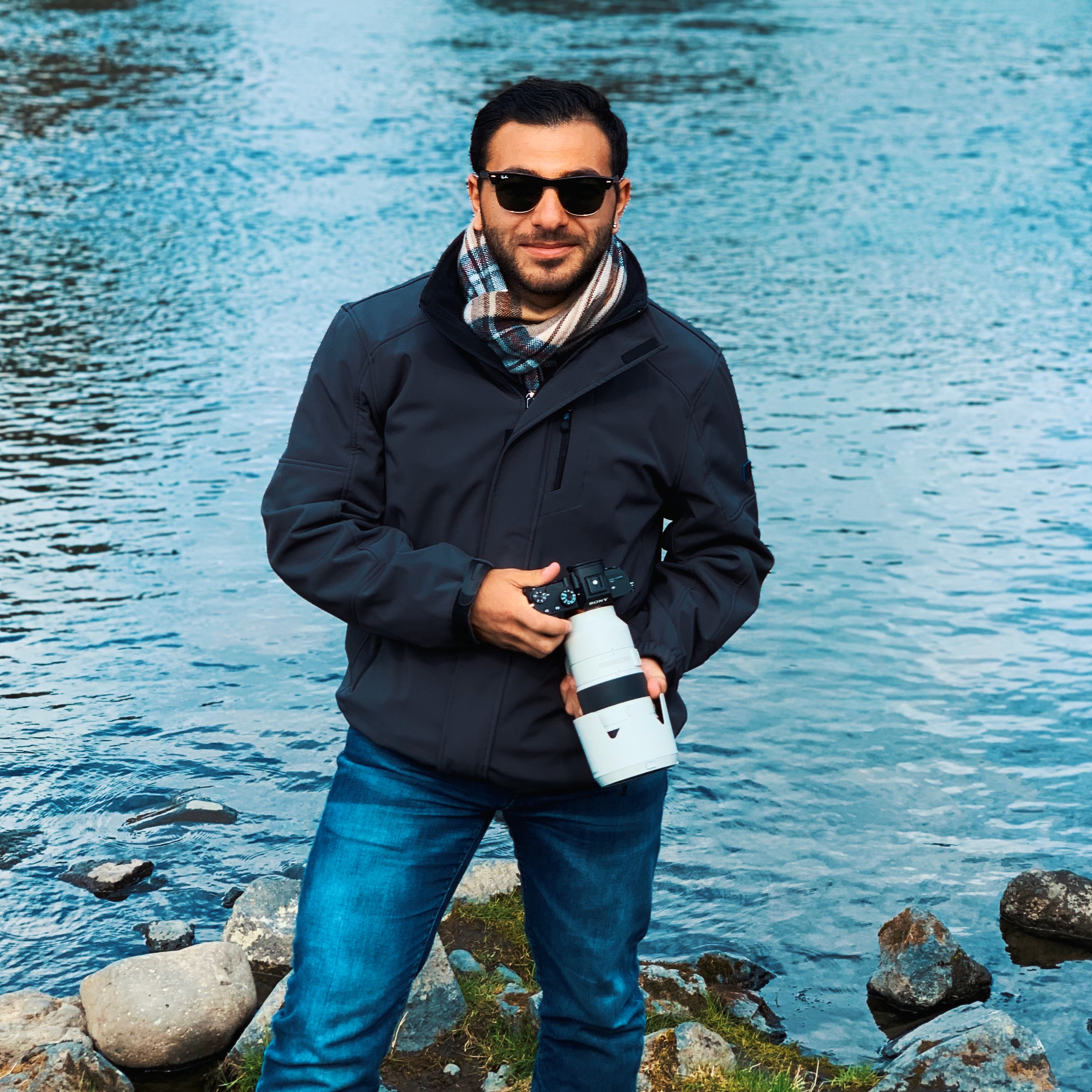
Is Micro Four Thirds the ultimate hack for wildlife photography? You have seen them. The person in your local park photographing a tiny bird who swears by OM System. After using the OM-1 Mark II and a few of their lenses in Yellowstone over the last couple of weeks, I can say with certainty that Micro Four Thirds is thriving in this medium. But like everything, it comes with drawbacks, and there are a few that have kept me from fully crossing over.
Disclosure: this video is sponsored by OM System. They have no say in what I say here and all opinions are my own. Honestly, this video was my idea in the first place. Some of the links below are also affiliate links, so if you buy through them I earn a small commission at no extra cost to you.
What is Micro Four Thirds, and why does it matter for wildlife?
Micro Four Thirds is a sensor size. The OM-1 Mark II is OM System's flagship, and its sensor is about half the size of a full frame sensor. That gives you a 2x crop factor, which is the whole trick. The 150-400mm f/4.5 I had on it becomes a 300-800mm equivalent at f/4.5. That is incredible reach in a lens you can actually carry.
The camera is around 20 megapixels, which sounds low. But megapixels really help with two things, printing and cropping, and both are still possible at 20. Cropping is more limited, sure, but you are already starting from a 2x crop, so you do not need to crop nearly as much as you would on a larger format camera.
OM-1 Mark II specs that actually matter in the field
Spec | What it is | Why it matters |
|---|---|---|
Sensor | 20MP stacked Micro Four Thirds | 2x crop factor doubles your effective reach |
Readout speed | Around 8 milliseconds | Fast panning will not warp your subject |
Burst | 120 frames per second | Still a rare spec, and this camera is not new |
Pro Capture | Buffers frames on half press | You stop missing takeoffs and leaps |
Stabilization | In body, very strong | I shot this entire trip handheld, photo and video |
Bit depth | 12-bit stills, 14-bit in High Res Shot | Less latitude in post than a 14-bit raw file |
Video | 10-bit | Good specs, though not my first pick for video |
The size and weight argument is the real one
As nature photographers we cover a lot of ground. I was out all week doing not particularly serious hiking, but hiking with a lot of gear. A system that does not weigh a million pounds is a big deal.
The thing I keep coming back to is this. On a full frame setup you are hauling all that extra glass to cover a larger sensor and let in a lot of light, and then you throw away much of that coverage and a chunk of those megapixels in post when you crop. At some point you are carrying it for nothing.
Then there is sheer bulk. Wildlife telephotos take up the most space of anything I own. That means specialized backpacks, buying extra backpacks, and the recurring conversation at the gate about whether I am checking that bag, where I explain that I have lithium batteries in there, which is true. Beyond hiking with the gear, storing it in a small space matters, and I live in a camper. I have more photo and video equipment than clothes. If you have seen my other videos you have seen me repeat outfits. It is what it is.
I put this system head to head with full frame several times in Yellowstone just to see how the focal lengths compare. Being able to get visually closer to wildlife without encroaching on their space, while keeping a genuinely safe distance, has been really useful. There is a resolution difference against full frame bodies with far more megapixels, and I will get to that.
The 2x crop does not cost you versatility
All of the OM System lenses benefit from it. The 150-400mm, the 300mm I have been using, and the 50-200mm f/2.8, which is one of my favorite wildlife lenses of all time and works out to a 100-400mm equivalent.
The crop does not stop you from getting environmental portraits either. I took one of a bison in Yellowstone with an epic sunset behind it that ended up being one of my favorite images of the week. You can still zoom out to short focal ranges and then reach out to the equivalent of 800mm. I wrote a full review of that lens in the OM System 50-200mm f/2.8 review.
Speed, Pro Capture, and stabilization
The OM-1 Mark II is a fully stacked sensor with a readout speed of around 8 milliseconds. If you pan fast with a rolling shutter sensor you can get distortion that makes wildlife look strange. That is not happening here unless you are panning wildly or shooting F1 or golf. In 98 percent plus of situations, 8 milliseconds is more than fast enough.
120 frames per second is still a novel spec. There are not many cameras that do it, and this one is not new anymore and still has it.
Pro Capture is the feature I would struggle to give up. You half press the shutter and the camera starts buffering images. When you fully press, it saves that sequence, so if a bird takes off or an animal leaps, you get the whole thing. Once you have this in a wildlife camera it is very hard to go back.
On stabilization, I shoot handheld 99 percent of the time normally, and with this camera it has been 100 percent. I have not taken the tripod out at all, for stills or video. Beyond not carrying a tripod, it lets you drop your shutter speed because you are not fighting handheld shake.
The downsides of Micro Four Thirds for wildlife
Low light. A smaller sensor does not gather as much light as a larger one. That is true across the board. Even with a faster lens, compared apples to apples, low light performance is not going to match full frame. I have been impressed with this camera given how fast those lenses are, but physics is physics.
Cropping headroom. If you are a heavy cropper, someone who shoots a wide environmental frame and then crops in tight, you have less room here than on a high megapixel body. Worth noting that in my OM-5 Mark II review, where I compared landscape images from a 60 megapixel camera against 20 megapixels directly, I did not find a significant difference.
Depth of field. This is where I notice the biggest gap, including in portraiture I have shot with OM System. Shallow depth of field is not as easily attainable as it is on full frame, and if you have shot medium format you know how quickly that gets extremely shallow. To be fair, their telephotos are significantly faster than most competitors at this size and focal length, and at long focal lengths you get more depth of field anyway and can open the aperture to compensate. In practice it is still really solid for both separation and compression.
12-bit stills. Many of my wildlife cameras shoot 14-bit raw. Twelve bits means less color information and less latitude in post. I do not do much post processing for wildlife, so it rarely bites me, but I like having the information there. You can get 14-bit using High Res Shot mode, which also gives you an 80 megapixel file, but that is really for landscapes and still subjects.
Video. It shoots 10-bit and the specs are good, and the stabilization at those focal lengths is genuinely impressive. I am still not crazy about the video I get out of a Micro Four Thirds sensor, mostly in lower light. If I were a hybrid shooter doing 60 to 80 percent video, this is not the system I would choose. For that side of things, see my Sony a7 V review.
Who is Micro Four Thirds actually for?
Wildlife shooters who want extreme speed, an 8 millisecond readout, and 120 fps
People covering a lot of ground, travel photographers, and anyone hiking in to find wildlife
Landscape shooters willing to use High Res Shot mode for 80 megapixel files. Some of my favorite landscapes ever came off OM System cameras
Photo first shooters who do not want a large rig, where compact size and weight are a genuine requirement
It is not for people who need maximum resolution, maybe for very large prints, though I would argue you can still print big from 20 megapixels.
Is Micro Four Thirds worth it for wildlife photography?
It is not for everybody, but it is one of the best options out there for nature photographers, and probably the biggest hack for wildlife photography I have come across. I really liked the images I got with this system over the last couple of weeks in Yellowstone.
If you want the full frame side of the comparison, I tested those in Sony a7 V vs a1 II in Yellowstone, the Sony a7R VI with the 100-400mm, and the Sony 600mm f/4.
Gear in this video
OM System OM-1 Mark II: explore.omsystem.com
M.Zuiko 150-400mm f/4.5 TC1.25x IS PRO: explore.omsystem.com
M.Zuiko 50-200mm f/2.8 IS PRO: explore.omsystem.com
FAQ
Is Micro Four Thirds good for wildlife photography? Yes. The 2x crop factor turns a 150-400mm into a 300-800mm equivalent, the OM-1 Mark II reads out in about 8 milliseconds, and Pro Capture means you stop missing takeoffs. The tradeoffs are low light and cropping headroom.
Is 20 megapixels enough for wildlife photography? For most people, yes. Megapixels matter for printing and cropping, and because you start at a 2x crop you do not need to crop as aggressively. If you routinely crop hard into wide frames, a higher resolution body will serve you better.
What is the 2x crop factor on Micro Four Thirds? The sensor is roughly half the size of full frame, so a lens gives you double the equivalent focal length. A 50-200mm behaves like a 100-400mm, and a 150-400mm behaves like a 300-800mm.
What is Pro Capture on the OM-1 Mark II? Half pressing the shutter starts buffering images. When you fully press, the camera saves those buffered frames, so you capture the moment before your reaction time caught up.
Is the OM-1 Mark II good for video? It shoots 10-bit with excellent stabilization, but I am not sold on Micro Four Thirds video in lower light. If you shoot 60 to 80 percent video, I would look at full frame instead.
Can you shoot landscapes on Micro Four Thirds? Yes. High Res Shot mode gets you to about 80 megapixels for still subjects, and some of my favorite landscape images have come from OM System bodies.
I am curious what you think. Is Micro Four Thirds the ultimate hack for wildlife photography? Let me know down in the comments. Thanks again for watching, and I will see you out there on the road.
Comments